Start with what the packaging must carry, then choose the look. Kraft paper suits everyday retail and a natural feel, coated art paper with lamination suits fashion, perfume and gifts, and rigid or folding boxes suit products that need protection or a sense of occasion. The finish should support the design and cope with handling, not simply add cost.
Paper bag materials
- Kraft paper: strong and natural-looking, in brown or white. Brown kraft changes how colours print, since inks sit on a brown base. Pale tints disappear, so bold one- or two-colour designs usually work best.
- Art paper: smooth coated paper that holds photographs and detailed colour well. It normally needs lamination to resist scuffing and tearing at the folds.
- Ivory or white board: a heavier, stiffer paper with a clean surface, used for premium bags that hold their shape.
- Specialty textured papers: available on request for a distinctive feel, though they can limit which finishes work and usually cost more.
Paper weight is measured in gsm. As a rough guide, lighter kraft often suits small, light purchases, while heavier stock, commonly in the region of 200 gsm and above, suits gift and boutique bags. Do not choose by the number alone. Ask for a sample, put your actual product inside, and carry it.
What makes a bag strong
Weight of paper is only one part of it. Handles, reinforcement and size often matter more.
- Twisted paper handles: economical and comfortable, often used on kraft bags.
- Flat paper handles: common on takeaway and high-volume retail bags.
- Ribbon or cotton rope handles: look premium and suit gift, jewellery and perfume bags. They need a reinforced top fold and a secure knot or eyelet.
- Die-cut handles: clean and simple, best for lighter contents, as the load sits on the paper itself.
Ask about card reinforcement at the base and under the handles for heavier contents. Size the bag around the product, leaving enough gusset for the width. An oversized bag makes the contents shift and strains the handles.
Choosing a box
- Folding carton: printed board that ships flat and is folded at the point of use. It suits cosmetics, food and retail products, and it stores easily.
- Corrugated: fluted board used for shipping and e-commerce, where protection matters most. Printing can be simple, or a printed liner can be added for a stronger look.
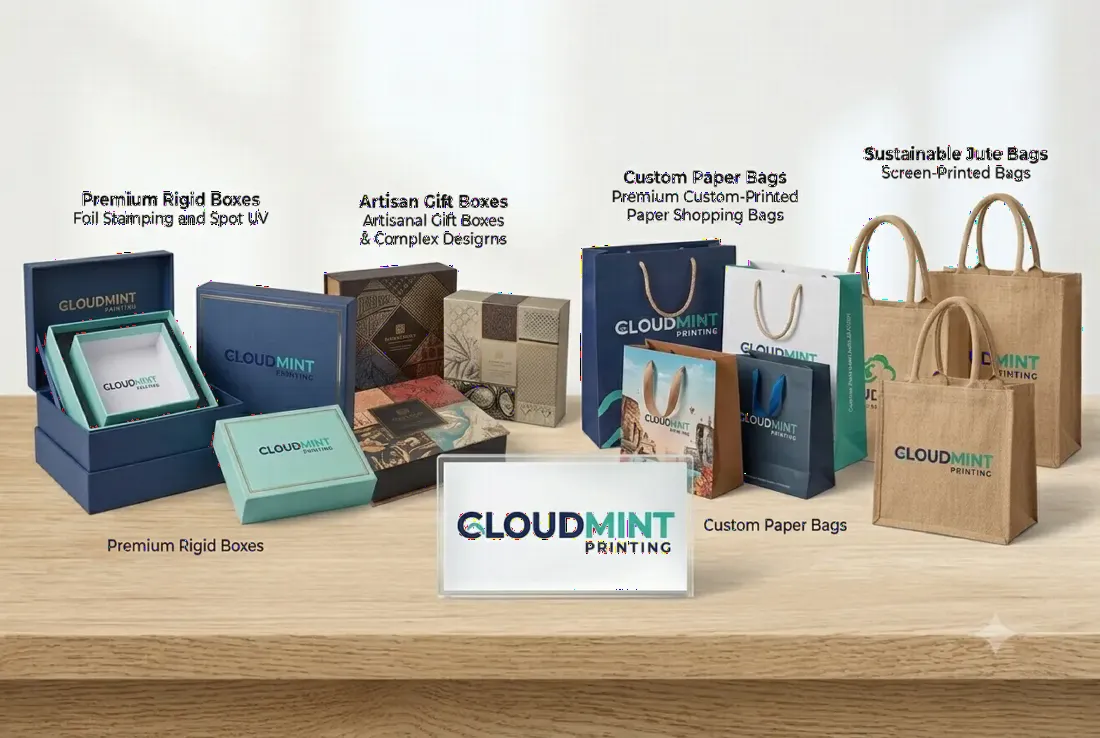
- Rigid box: thick board wrapped in printed or textured paper. It feels substantial and suits luxury items and corporate gifts, but it takes more material and labour, and its bulk adds to storage and delivery costs.
Inserts, such as card or foam, stop products moving around and can make a simple box feel considered. Plan them with the product in hand, not from drawings alone.
Finishes and what they do
- Matte lamination: soft, understated, and lessens glare, but dark matte surfaces can show scuffs and fingerprints.
- Gloss lamination: makes colours vivid and wipes clean, though it shows scratches and reflects more light.
- Soft-touch lamination: a velvety feel for premium products, on request, and usually more costly.
- Spot UV: a clear glossy layer on selected areas such as a logo. It works well against matte backgrounds.
- Foil stamping: metallic gold, silver or colours. Keep shapes simple, and be careful with very fine Arabic calligraphy.
- Embossing and debossing: raised or pressed shapes with a tactile result, best in thicker stock.
One or two finishes used with purpose often look better than every option combined. Folds also matter. Dark ink on a coated sheet can crack along the crease and show white, which lamination helps to reduce.
Practical questions before you order
- Food contact: if the packaging touches food directly, ask for a suitable food-grade material. Check current requirements with the Saudi Food and Drug Authority for your product.
- Grease and moisture: bakery and restaurant items may need a barrier or coating, so tell the supplier what goes inside.
- Recycling: plain paper and board are generally easier to recycle than heavily laminated or foil-covered items. If this matters to your brand, keep finishes light and avoid unverified environmental claims on the packaging.
- Storage: heat, humidity and sun can fade or warp stock. Keep packaging out of hot storerooms and direct sunlight.
- Print quantity: ask whether a larger run lowers the cost per piece, and balance that against your storage space and any planned rebrand.
Artwork and timing
Send the box or bag dimensions with a sample of the product. Ask for a dieline template before designing, so that the logo does not land on a fold or gusset. Check the Arabic on every face, including the sides. Our free design consultation can suggest materials to suit your product and your budget. Standard orders typically take 2 to 5 business days plus delivery, while rush work is available on request, so confirm the time for your particular specification when you enquire.
Packaging and bags cover the printed items that carry your product to the customer, including paper bags, gift boxes, product packaging, labels and stickers. We work with retailers, food brands, perfume sellers and e-commerce stores in Riyadh and deliver across Saudi Arabia, with free design support from our in-house team.